
Speaking the Same Language or Automated Translation? Designing
Semantic Interoperability Tools for Data Spaces
Maximilian St
¨
abler
1 a
, Tobias Guggenberger
2
, DanDan Wang
3
, Richard Mrasek
4
, Frank K
¨
oster
1
and Chris Langdon
5
1
German Aerospace Center (DLR), Institute for AI Safety and Security, Ulm, Germany
2
Fraunhofer ISST, Dortmund, Germany
3
T-Systems International GmbH, Bonn, Germany
4
T-Systems International GmbH, Darmstadt, Germany
5
Drucker School of Business, Claremont Graduate University, Claremont, U.S.A.
Keywords:
Data Spaces, Semantic Interoperability, Design Principles, Data Ecosystem.
Abstract:
This paper tackles the challenge of semantic interoperability in the ever-evolving data management and shar-
ing landscape, crucial for integrating diverse data sources in cross-domain use cases. Our comprehensive ap-
proach, informed by an extensive literature review, focus-group discussions and expert insights from seven pro-
fessionals, led to the formulation of six innovative design principles for interoperability tools in Data Spaces.
These principles, derived from key meta-requirements identified through semi-structured interviews in a focus
group, address the complexities of data heterogeneity and diversity. They offer a blend of automated, scalable,
and resilient strategies, bridging theoretical and practical aspects to provide actionable guidelines for semantic
interoperability in contemporary data ecosystems. This research marks a significant contribution to the do-
main, setting a new design approach for Data Space integration and management.
1 INTRODUCTION
In today’s digital era, data is a critical asset driv-
ing innovation and economic growth. The European
Data Strategy (European Commission, 2020) aims to
create a single market for data within Europe, em-
phasizing inter-organizational data sharing to foster a
competitive and innovative digital economy through
seamless and secure data exchange. This strategy
supports the development of new products, enhances
decision-making, and contributes to societal benefits
such as improved healthcare and sustainable devel-
opment (Hutterer et al., 2023; Guggenberger et al.,
2024).
Data Spaces and Data Ecosystems are central to
this strategy. Data Spaces facilitate the sovereign and
secure exchange of data between organizations, while
Data Ecosystems integrate multiple Data Spaces, cre-
ating environments that support data-driven innova-
tion across various domains and industries.
Our research addresses the challenge of achiev-
ing semantic interoperability within and across Data
a
https://orcid.org/0000-0003-1311-3568
Spaces. We aim to develop tools supporting specific
ontologies and data structures within domains while
facilitating their integration across different domains,
preventing isolated silos and supporting a wide array
of applications (Otto, 2022). Semantic interoperabil-
ity is crucial for data integration, ensuring different
systems can correctly interpret and utilize exchanged
data. Addressing the gap in semantic interoperabil-
ity research compared to other layers, our paper of-
fers new insights and solutions to this critical aspect
of data interoperability.
Before introducing the research questions, we
clarify the significance of the three desirable attributes
of semantic interoperability: automatable, scalable,
and resilient. Automatable interoperability reduces
manual intervention and errors, increasing efficiency.
Scalability ensures a system can handle increasing
data and participants without compromising perfor-
mance, supporting the expansion of data ecosystems.
Resilience maintains system functionality and perfor-
mance despite variations in data quality, formats, and
sources, ensuring robust data exchange amid disrup-
tions or changes.
Stäbler, M., Guggenberger, T., Wang, D., Mrasek, R., Köster, F. and Langdon, C.
Speaking the Same Language or Automated Translation? Designing Semantic Interoperability Tools for Data Spaces.
DOI: 10.5220/0012916700003825
In Proceedings of the 20th International Conference on Web Information Systems and Technologies (WEBIST 2024), pages 209-217
ISBN: 978-989-758-718-4; ISSN: 2184-3252
Copyright © 2025 by Paper published under CC license (CC BY-NC-ND 4.0)
209

Our research aims to develop tools for the integra-
tion, management, and interconnection of data across
various domains. Our research question is:
RQ: How can tools be designed for automat-
able, scalable, and resilient semantic interop-
erability within and across Data Spaces?
Our approach involves a two-pronged strategy. First,
we conduct a literature review and expert interviews
to gather and analyze existing knowledge, establish-
ing meta-requirements (MR). Using these MRs, we
derive design principles (DPs) for tools embodying
automation, scalability, and resilience, essential for
semantic interoperability between Data Spaces (Curry
et al., 2022).
By harmonizing disparate data models and stan-
dards, our approach lowers data sharing and integra-
tion barriers. Successful development and implemen-
tation of these principles promise to streamline data
integration processes across domains, paving the way
for a unified and efficient data ecosystem. This trans-
formation could revolutionize the data landscape in
Europe, setting a global benchmark for data interop-
erability and integration (Jabbar et al., 2017; Ouksel
and Sheth, 1999).
The paper is structured as follows. Section 2 pro-
vides foundational knowledge, delineating the litera-
ture streams for developing MRs. Section 3 details
our research methodology. The MRs, derived from
expert interviews, are presented in Section 4. Build-
ing upon these MRs, Section 5 elaborates on the DPs.
Section 6 discusses the broader implications of our
findings, acknowledges study limitations, and high-
lights potential future research avenues, concluding
with a summative overview.
Main Contribution. This paper advances semantic
interoperability in heterogeneous data ecosystems and
Data Spaces. The main contributions are:
• Conceptual Clarity: Clear differentiation be-
tween Data Spaces and traditional database sys-
tems, enhancing the understanding of their unique
roles within data ecosystems.
• Meta-Requirements and Design Principles:
Identification of key meta-requirements for ser-
vices promoting semantic interoperability, form-
ing the basis for novel design principles ensuring
automation, scalability, and resilience in data ex-
change processes.
• Methodological Rigor: Comprehensive method-
ological framework detailing each study stage,
providing a robust basis for the study’s conclu-
sions.
• Timely and Relevant Research: Addressing
contemporary issues within the European Data
Strategy, aligning contributions with strategic ob-
jectives to foster a unified European data market,
with practical implications for policy and industry
stakeholders.
• Innovative Approach: Dual focus on meta-
requirements and design principles to tackle se-
mantic interoperability challenges, providing ac-
tionable guidelines for developing tools support-
ing data integration and management across di-
verse domains.
In summary, the paper bridges critical gaps in
the literature by offering a theoretically and empir-
ically grounded framework for advancing semantic
interoperability in data spaces, thus supporting the
broader goal of creating interconnected and efficient
data ecosystems.
2 THEORETICAL BACKGROUND
This chapter outlines the theoretical foundations of
dataspaces and semantic interoperability, crucial for
deriving design principles (DPs).
2.1 Dataspaces
Originally conceptualized by Franklin and Halvey
(Franklin et al., 2005; Halevy et al., 2006), datas-
paces have evolved as an alternative to traditional re-
lational databases. Table 1 presents diverse defini-
tions of dataspaces.
Numerous dataspace approaches, such as Gaia-
X, Catena-X, IDS, FAIR dataspaces, and SOLID,
emphasize technical interoperability (European Com-
mission, 2020). However, full technical compatibility
remains unachieved. Analysis of various reference ar-
chitectures reveals core components essential for con-
trolled and secure data exchange (Curry, 2020a; Curry
et al., 2022; Otto et al., 2022; Theissen-Lipp et al.,
2023):
1. Providing and Accessing Data (Connector): Man-
ages data according to usage policies, ensuring
data sovereignty.
2. Intermediation Services (Metadata broker, App
Store): The Resource Catalog lists available of-
fers, characteristics, and conditions of use.
3. Identity Management and Secure Data Exchange:
Ensures participant identity verification and trans-
action security.
WEBIST 2024 - 20th International Conference on Web Information Systems and Technologies
210

Table 1: Extract of definitions of datspaces - the complete overview is shown in (Curry, 2020b).
Definition Source
”Dataspaces are not a data integration approach; rather, they are more of a
data co-existence approach. The goal of dataspace support is to provide base
functionality over all data sources, regardless of how integrated they are.”
(Halevy et al., 2006)
“A dataspace system processes data, with various formats, accessible through
many systems with different interfaces, such as relational, sequential, XML,
RDF, etc. Unlike data integration over DBMS, a dataspace system does not
have full control on its data, and gradually integrates data as necessary.”
(Wang et al., 2016)
“Dataspace is defined as a set of participants and a set of relationships among
them.”
(Singh and Jain, 2011)
4. Management Components: Manages participant
activities such as registration, deregistration, re-
vocation, suspension, and monitoring.
Dataspaces offer benefits to businesses (e.g., in-
dustrial data sharing, access to heterogeneous data
ecosystems), individuals (e.g., control over personal
data), science (e.g., impact of research data), and
governance/public sector (e.g., data commons for im-
proved services) (Curry et al., 2022).
Dataspaces provide federated and self-determined
interoperability for specific use cases (Otto, 2022).
Examples include Catena-X for the automotive indus-
try and the Mobility Dataspace (MDS). The European
Commission envisions a singular European datas-
pace (Theissen-Lipp et al., 2023), extending beyond
enterprise boundaries to include distributed, feder-
ated, and decentralized data systems. Interoperability
across dataspaces (dataspace mesh) poses challenges
in scalability, efficiency, and governance (Drees et al.,
2021).
2.2 Semantic Interoperability
”Semantic interoperability ensures that these
exchanges make sense—that the requester and
the provider have a common understanding of
the “meanings” of the requested services and
data.” - (Heiler, 1995)
Semantic interoperability, recognized since (Heiler,
1995), emphasizes meaningful data exchange through
shared understanding. (Ouksel and Sheth, 1999) cate-
gorizes interoperability into system, syntax, structure,
and semantics levels.
Syntactic heterogeneity involves differences in
machine-readable data representations, while struc-
tural interoperability concerns data modeling con-
structs. Despite advances in systems, syntactic, and
structural interoperability, solutions for semantic in-
teroperability are still elusive (Ouksel and Sheth,
1999).
Many web services technologies assume seman-
tic homogeneity, implying a universal vocabulary
(Uschold and Gruninger, 2004). However, histori-
cal attempts to integrate systems under a single vo-
cabulary have largely failed (Haslhofer and Klas,
2010). Recognizing semantic heterogeneity is essen-
tial for seamless system connectivity (Uschold and
Gruninger, 2004).
Figure 1 illustrates the challenges of heterogene-
ity in information systems and its implications for se-
mantic interoperability. ”Data Heterogeneity” refers
to physical variances in data, while ”Reasons for Mis-
interpretations” highlights subjective sources of error.
In dataspaces, characterized by distributed, au-
tonomous, diverse, and dynamic information sources,
accessing relevant and accurate information is com-
plex (Ouksel and Sheth, 1999). Semantic interoper-
ability and semantics-based technologies are funda-
mental for market success and establishment of datas-
paces (Theissen-Lipp et al., 2023; Otto et al., 2022;
Curry et al., 2022). Integration of complex systems
across domains necessitates a unified framework for
effective communication (Boukhers et al., 2023).
While the necessity for such services is estab-
lished (Boukhers et al., 2023), concrete implementa-
tion proposals or practical tests are lacking. This gap
motivates our proposal of DPs for such a service.
3 METHODOLOGY
To develop theoretically and empirically grounded
DPs for interoperability tools for dataspaces, we em-
ployed a structured methodology. We will discuss
data collection, analysis, and DP generation. First, we
conducted a structured literature review to gather ex-
isting knowledge as preliminary design requirements.
Second, we refined our understanding of the prob-
lem space and restructured the requirements. Finally,
we developed an interview guideline for conducting
semi-structured interviews to triangulate our prelim-
Speaking the Same Language or Automated Translation? Designing Semantic Interoperability Tools for Data Spaces
211
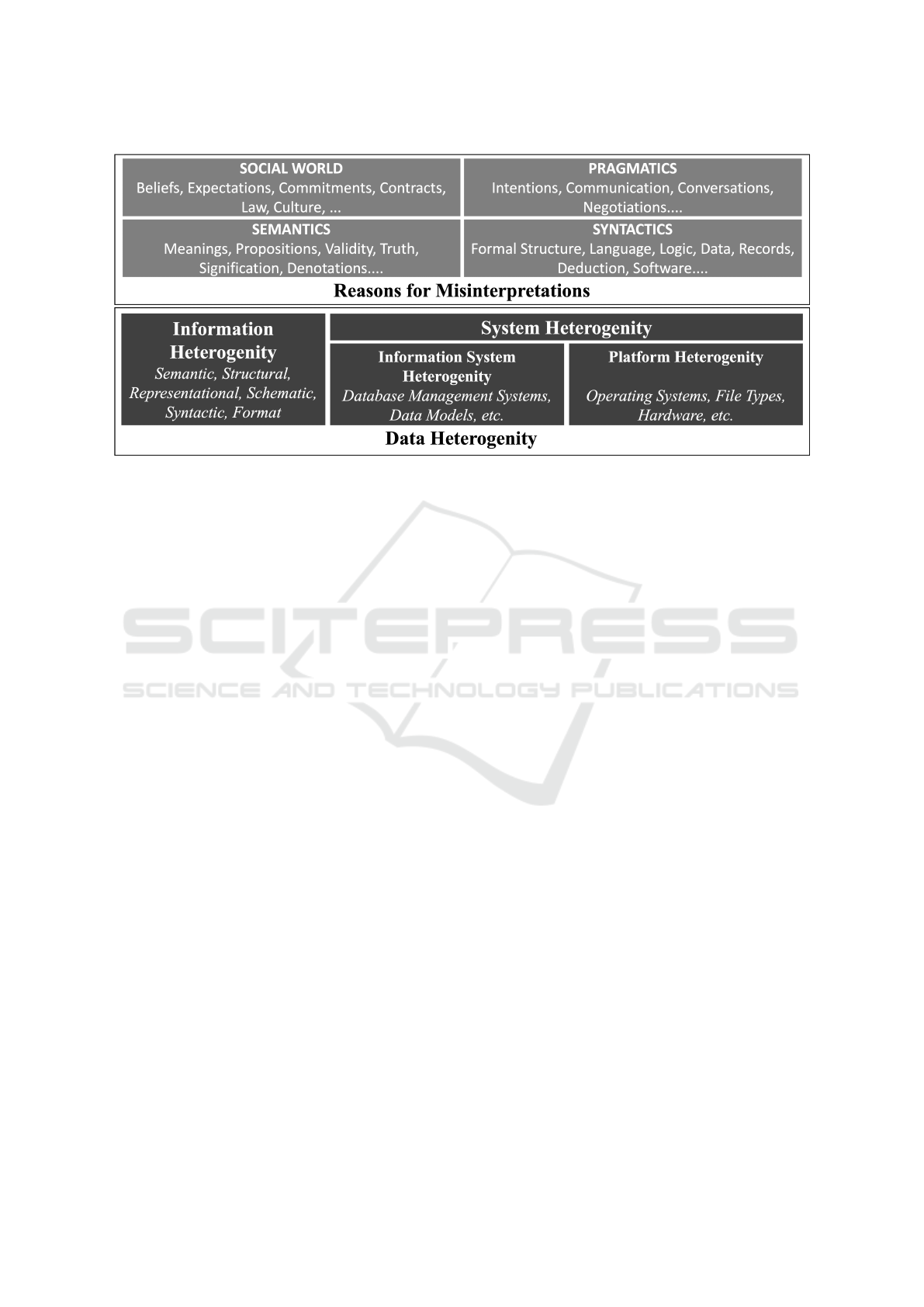
Figure 1: Heterogeneity in information systems and reasons for misinterpretations of data according to (Wenz et al., 2021).
inary findings with empirical data. We performed a
thematic analysis of focus group discussions to iden-
tify key themes and topics, which then structured the
interview guide, ensuring questions explored relevant
issues in depth.
3.1 Literature Review
We conducted a structured literature review following
established guidelines (Webster and Watson, 2002;
Zhang et al., 2011; Levy and Ellis, 2006; Vom Brocke
et al., 2015). We identified relevant databases (IEEE
Xplore, ACM Digital Library, ScienceDirect, Wiley
InterScience, SCOPUS) and used filtering functions
to include only peer-reviewed publications with full-
text access. Using iterative search strings based on
Schoormann et al. (Schoormann et al., 2018), we per-
formed the search as shown in Table 2.
This process yielded 69 distinct publications. Af-
ter filtering by title, abstract, and full text, 31 publi-
cations remained. We scanned references from these
publications, adding three further studies, resulting in
a total of 31 publications.
3.2 Focus Groups and Expert
Interviews
Informed by the literature review, we structured pre-
liminary requirements for semantic interoperability
tools. These were evaluated and refined in focus
groups formed by the core working group ”Seman-
tic Modeling and Interoperability” from a family of
projects funded by the German Federal Ministry for
Economic Affairs and Climate Protection. We used
seven remote meetings for this purpose.
The focus group has 16 members from industry,
research, and the public sector, with expertise in inter-
operability, data systems, application programming,
semantics, operators, and end users.
We developed a semi-structured interview guide-
line based on the literature review and focus group
discussions. Semi-structured interviews allowed ex-
perts to provide input on specific topics. After seven
interviews with experts (Table 3), theoretical satura-
tion was reached.
3.3 Design Principle Generation
DPs are prescriptive guidelines codifying design
knowledge about a specific class of artifacts (Chan-
dra et al., 2015; Gregor, 2006; Baskerville et al.,
2018). They guide developers to increase design pro-
cess efficiency and communicate design knowledge
with stakeholders (Chandra et al., 2016; Mcadams,
2003; Hevner et al., 2004). DPs are central to de-
sign science research (Sein et al., 2011; M
¨
oller et al.,
2020), covering core components of a design theory:
causa finalis, materialis, formalis (Jones and Gregor,
2007). We followed guidelines from M
¨
oller et al.
(M
¨
oller et al., 2020) and used Chandra et al.’s (Chan-
dra et al., 2015) template for documentation. Our
approach combined a literature review, focus group
meetings, and expert interviews to elicit MRs. We de-
veloped a preliminary list of requirements, discussed
them in focus groups, and refined the problem space
and solution objective. This informed the question-
naire for expert interviews, and we finally evaluated
the DPs argumentatively.
WEBIST 2024 - 20th International Conference on Web Information Systems and Technologies
212
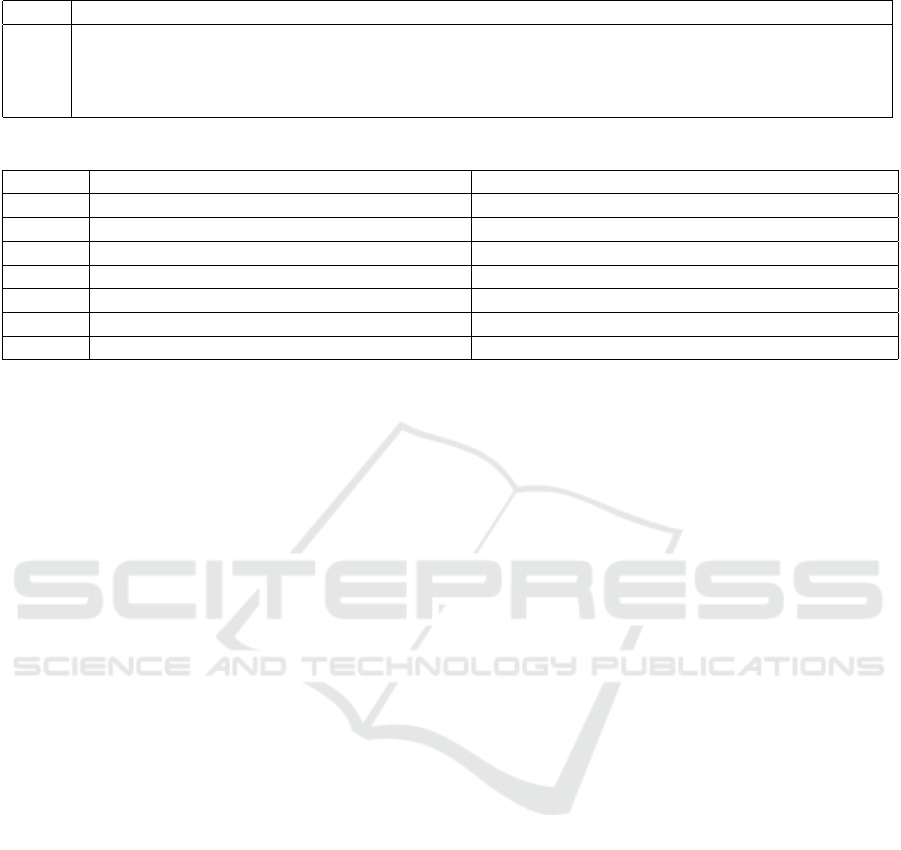
Table 2: Search Strings.
Search Strings
S1 (semantic* AND (automated* OR resilient OR scalable OR shared OR sharing))
S2 (interoperability* OR inter-operability)
S3 (dataspace* OR data space OR datenraum)
S S1 AND S2 AND S3
Table 3: Expert Overview.
Expert Occupation Company / Industry
E1 Data Manager (PhD) Ministry of Transport and Mobility Transition
E2 Research Associate Data Business Institute for Software and Systems Engineering
E3 Senior Expert Cyber Physical Systems Automotive Supplier (> 200.000 employees)
E4 Lead Business Consultant (PhD) Large consulting company (> 10.000 employees)
E5 Head of Advisory Council Dynamic Data Economy Foundation
E6 Research Associate Industry 4.0 Innovation Large Software Company (> 100.000 employees)
E7 Research Associate Data Science and AI Institute for Applied Information Technology
4 FORMULATING
META-REQUIREMENTS
This section presents the MRs for services that enable
semantic interoperability in dataspaces to be automat-
able, scalable, and resilient. Derived from literature
and expert interviews, Table 4 provides an overview
of the MRs and their basis. Below, we describe the
five MRs for semantic interoperability with selected
quotations to illustrate their meaning.
Meta-Requirement # 1: Contextualization and
metadata: Effective semantic interoperability re-
quires appropriate metadata and context. E1 and E4
emphasize the importance of ”metadata or extended
metadata” and ”semantic models” for accurate data
interpretation. Comprehensive metadata visibility, as
noted by E2, is crucial for understanding data prove-
nance and usage. Curry et al. (Curry, 2020b) state
that dataspaces must support various data models and
query languages. 71.43% of experts highlighted the
importance of contextualization and metadata, crit-
icizing current approaches as incomplete or insuffi-
cient (E1, E2, E4, E6).
Meta-Requirement # 2: Resilience of data: An
artifact must handle diverse data qualities and for-
mats. E1 stresses the need for systems that can ”make
the data comparable through automation,” while E5
emphasizes ensuring the integrity and authenticity
of data. Approaches from ontology matching and
alignment can help overcome semantic heterogeneity
(Otero-Cerdeira et al., 2015; Liu et al., 2021; Ard-
jani et al., 2015; Uschold and Gruninger, 2004). Re-
silience and scalability are deemed critical by 57.12%
of experts.
Meta-Requirement # 3: Scalability: Effective
semantic interoperability requires scalable solutions
accessible to users regardless of their technical back-
ground. E1 and E6 highlight the need for automated
approaches to homogenize data. E7 mentions the ease
of transforming data formats as crucial. Scalability
ensures dataspaces can expand and accommodate in-
creasing data and complexity (Theissen-Lipp et al.,
2023). 57.12% of experts emphasized scalability, of-
ten linked with automation and resilience (E1, E2,
E7).
Meta-Requirement # 4: Ease of use and simplic-
ity: Widespread adoption depends on simplicity and
user-friendliness. E4 calls for “intuitive design” and
open-source artifacts. E3 and E6 highlight the im-
portance of reducing effort and not requiring exten-
sive expertise. Natural language interfaces, like those
provided by AI and LLMs, make systems more ap-
proachable for non-experts (Wang et al., 2023; Pan
et al., 2023). Boukhers et al. (Boukhers et al., 2023)
suggest AI algorithms for semantic interoperability.
42.85% of experts stressed simplicity.
Meta-Requirement # 5: Community-driven
learning: Leveraging collective intelligence enhances
and evolves artifacts over time. 28.57% of experts
noted this as an important characteristic. E1, E5 em-
phasize updating data schemas and learning domain-
specific characteristics (E6). Dataspaces must han-
dle the volatility of the data landscape (Curry, 2020a;
Drees et al., 2021; Franklin et al., 2005). Community
feedback leads to continuous refinement and effec-
tiveness (Otero-Cerdeira et al., 2015; Liu et al., 2021;
Ardjani et al., 2015; Uschold and Gruninger, 2004).
These MRs form a cohesive framework for an ar-
tifact that enables semantic interoperability. Address-
Speaking the Same Language or Automated Translation? Designing Semantic Interoperability Tools for Data Spaces
213
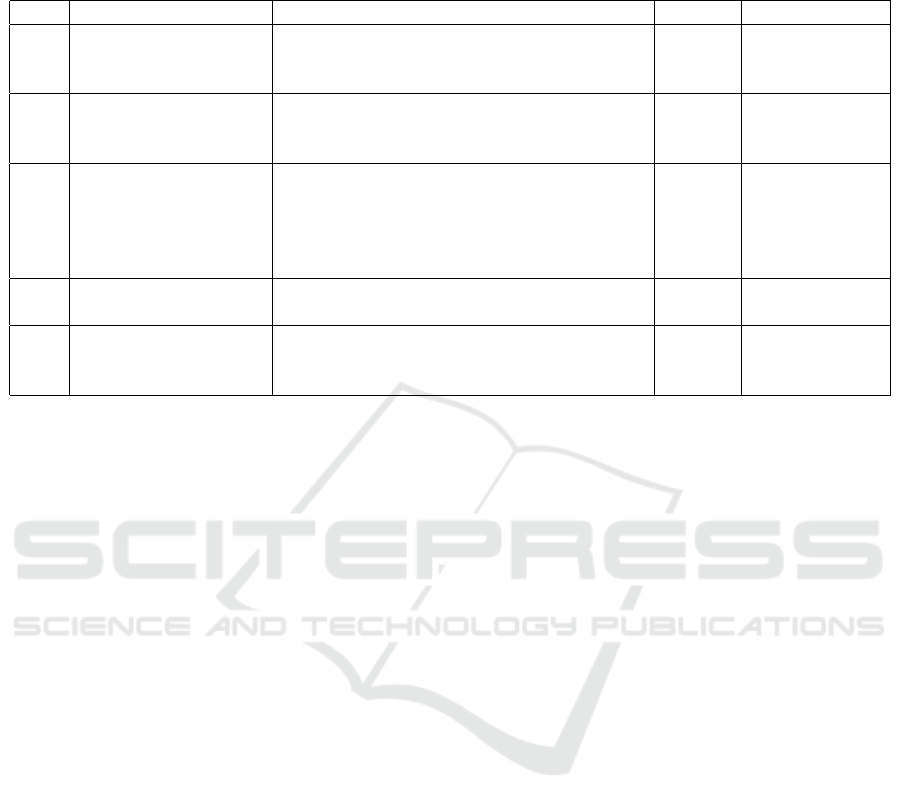
Table 4: Meta-Requirements Overview. In addition to the Meta-Requirement and Description columns, the Experts col-
umn lists which experts have named requirements that can be assigned to the respective meta-requirement. Meta-requirements
have been ordered by importance, starting with the most important MR.
MR Meta-Requirement Description Experts #Experts (%)
1 Contextualization and
metadata
The artifact should require the provision
of data context and mandatory metadata
(specifics to be defined) for effective use
E1, E2,
E4, E6,
E7
5 (71,43%)
2 Resilience of data The artifact must be resistant to different data
qualities, data types and data formats in order
to ensure practical usability
E1, E3,
E5, E6
4 (57, 12%)
3 Scalability The artifact should be designed in such a way
that it can be automated so that people with-
out specialized knowledge can use it effec-
tively to facilitate scalability in the complex
semantic landscape
E1, E2,
E5, E6
4 (57, 12%)
4 Ease of use and sim-
plicity
To encourage broad engagement, the artifact
should be designed for extreme simplicity
E3, E4,
E7
3 (42,85%)
5 Community-driven
learning
The artifact should be able to continuously
learn and improve by taking into account
feedback from the community and users
E1, E7 2 (28,57%)
ing these core needs allows the proposed artifact to
serve as a robust, inclusive, and adaptive framework
for data management. Chapter 5 derives DPs based
on these MRs.
5 DESIGN PRINCIPLES
The following DPs were formulated based on the
MRs to connect various data sources, enhance data
resilience, and promote an inclusive and adaptive en-
vironment for data exchange in dataspaces. Figure 2
shows the fulfillment of the MRs by the DPs (M
¨
oller
et al., 2020). The seven principles are discussed be-
low using the format of Chandra et al. (Chandra et al.,
2015). A preliminary evaluation using Iivari et al.’s
(Iivari et al., 2021) framework is also provided.
5.1 Design Principle Description
DP1: Integration Optimization: Design interoper-
ability artifacts to optimize the seamless integration
of diverse data sources, domains, and formats, em-
phasizing scalability and user-friendly automation for
robust integration solutions.
Rationale: Essential for establishing interopera-
ble dataspaces, this principle ensures seamless inte-
gration of heterogeneous data. Derived from MR1,
MR2, and MR3, it supports scalability and user-
friendly automation, making diverse data comparable
through automated processes (E1).
DP2: Data Resilience Promotion: Equip the sys-
tem with mechanisms for data robustness, ensuring
reliable performance with data of varying quality lev-
els, types, and formats.
Rationale: Reflecting MR1, MR2, MR3, and
MR5, this principle ensures the artifact can handle
varying data quality. Data resilience is foundational
for maintaining reliability across different data land-
scapes (E7).
DP3: Metadata Enhancement: Implement rich
metadata and contextual information in interoper-
ability artifacts, enabling effective data use and un-
derstanding across various domains.
Rationale: Building upon MR1 and MR2, this
principle mandates rich metadata for data utility.
Services providing extended metadata and semantic
models are crucial for accurate data interpretation
(E1, E4).
DP4: Universal Design for Interoperability:
Construct interoperability artifacts with a universal
design, simplifying interactions for a broad range of
users, regardless of technical expertise.
Rationale: Corresponding with MR3 and MR5,
this principle democratizes the use of interoperability
artifacts, making them accessible to users with vary-
ing technical knowledge (E5).
DP5: Adaptive Improvement: Develop arti-
facts supporting adaptive learning through commu-
nity feedback, allowing continuous improvements and
integration of new data formats.
Rationale: Aligned with MR3 and MR4, this DP
WEBIST 2024 - 20th International Conference on Web Information Systems and Technologies
214
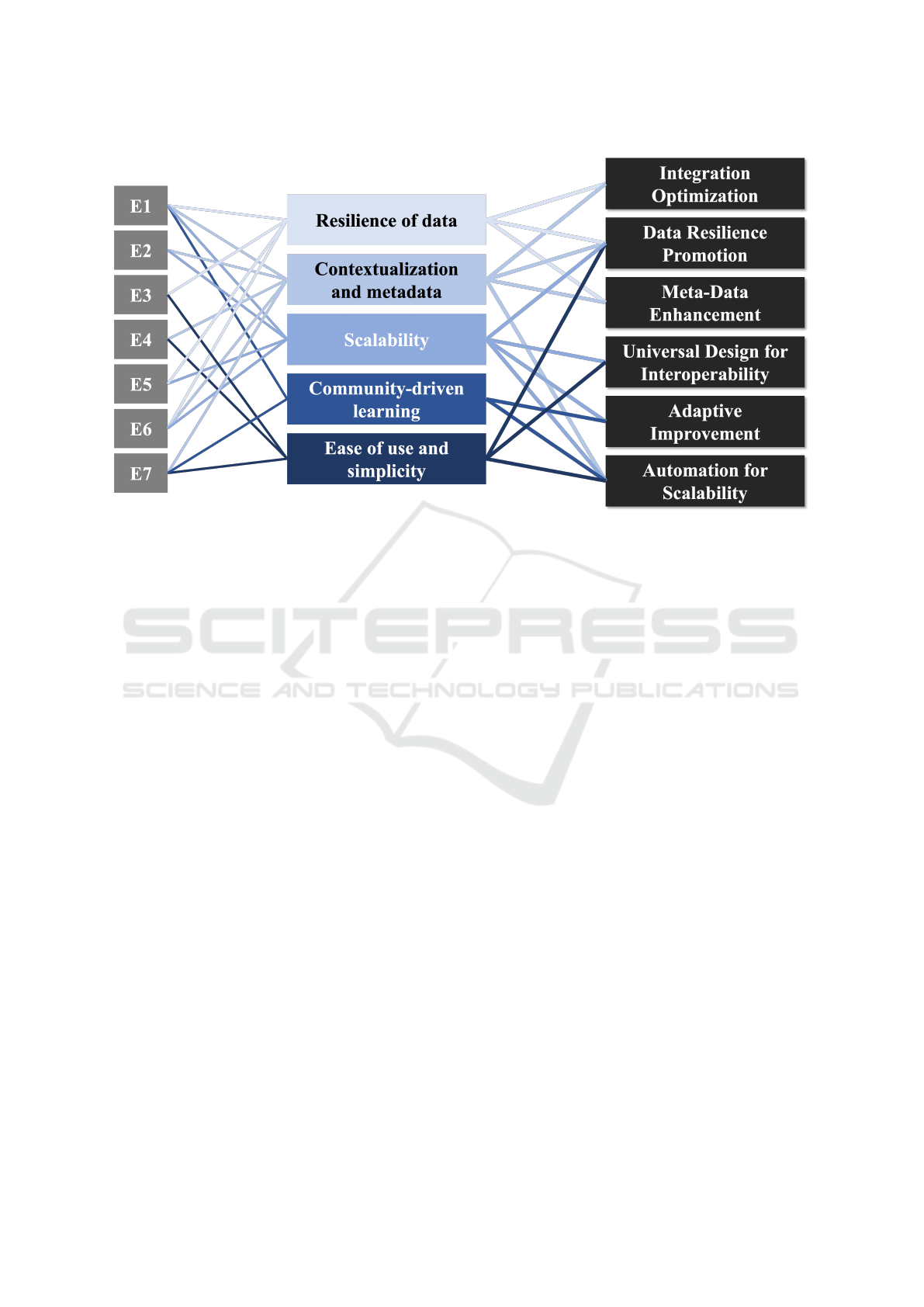
Figure 2: Overview of the dependencies of the experts, the meta-requirements and the design principles. The links between
the experts and the meta-requirements show on which interviews the meta-requirements were formulated and between the
meta-requirements and the design principles the basis for deriving the design principles from the meta-requirements.
emphasizes adaptive learning from community feed-
back, ensuring artifacts evolve with new data formats
and community insights (E1).
DP6: Automation for Scalability: Integrate a
high degree of automation in interoperability artifacts
to enhance resilience against varying data qualities
and formats, establishing a scalable framework.
Rationale: Reflecting MR2, MR3, MR4, and
MR5, automation enhances the resilience and scala-
bility of artifacts, managing complexity and fostering
future expansion (E6).
Incorporating these principles into interoperabil-
ity artifacts creates resilient, scalable, and user-
friendly dataspaces, meeting the demands of an in-
terconnected, data-driven world.
5.2 Preliminary Evaluation
We evaluated the DPs as a set, the unit of prescrip-
tive knowledge (Iivari et al., 2021), using Chandra et
al.’s (Chandra et al., 2015) framework. The DPs are
accessible, using practitioner and domain expert lan-
guage. They are important, addressing a key pillar of
the European Interoperability Framework (Commis-
sion, 2023), and provide clear guidance on developing
tools for semantic interoperability.
The novelty of providing a comprehensive set
of DPs is notable, as no publication currently ad-
dresses tools for enabling semantic interoperability
in dataspaces. The DPs are actable, offering action-
able quotes from experts, and provide guidance for
developers of interoperability tools. The argumenta-
tive evaluation suggests the DPs are sufficiently de-
fined and usable for their intended purpose.
Based on the DPs derived in this work, a software
artifact was designed in a European-funded project
in the mobility domain. This artifact simplifies and
standardizes the process of creating semantic descrip-
tions of datasets and data services. This tool is utilized
within a project family consisting of over 80 partners,
primarily from industry, but also including public sec-
tor and research partners.
Initial feedback indicates that the tool enables the
creation of meaningful descriptions more easily, al-
lowing subject matter experts and domain experts to
perform this task, which brings significant value. Fur-
ther feedback and additional tests will be collected to
enhance the tool’s effectiveness and usability.
Further feedback and additional tests will be con-
ducted to gather more insights and improve the tool’s
functionality and user experience. This iterative feed-
back loop is crucial for refining the tool and ensuring
it meets the evolving needs of the data interoperability
landscape.
Speaking the Same Language or Automated Translation? Designing Semantic Interoperability Tools for Data Spaces
215

6 CONCLUSION AND FUTURE
WORK
In the rapidly evolving landscape of data management
and sharing, semantic interoperability is a crucial fac-
tor. Integrating different data sources, models, and
ontologies is a complex but important task.
Contributions. Our study makes a significant
contribution to semantic interoperability in datas-
paces by developing six novel DPs. These principles
integrate extensive conceptual and empirical knowl-
edge and are specifically tailored to the requirements
of automatic, scalable and resilient semantic inter-
operability. The DPs are new to semantic interop-
erability for dataspaces and the ability to translate
complex theories into practical, actionable guidelines,
thus providing significant added value for academic
research and practical application in dataspace man-
agement. The development of these principles is
based on a careful analysis of 31 professional pub-
lications and expert interviews, underlining their rel-
evance and applicability in current and future datas-
pace integration and management scenarios.
Limitations. While our research provides direc-
tional insights, some limitations need to be consid-
ered. Research on dataspaces is subject to continuous
change, which means that our findings, although cur-
rent, may require future adjustments. Furthermore,
the design principles presented are yet to be practi-
cally evaluated in terms of their effectiveness in real-
world application scenarios. The qualitative data of
our study, obtained through a focus group and expert
interviews, offer multiple perspectives but might be
shaped by the context of the participants.
Future Work. To address these limitations and
further develop our research, several avenues are
open. An immediate step is the instantiation of the
DPs into a working prototype, allowing for practical
evaluation. We are establishing a conceptual frame-
work for developing this prototype with a small devel-
oper group. Before development, an empirical eval-
uation with a broader expert group is planned to en-
sure the effectiveness and practical applicability of the
DPs, particularly focusing on their level of abstraction
and guidance for practitioners. Another critical area
of exploration is the level of integration of interoper-
ability tools within dataspaces and the extent of their
specialization. Our long-term vision is to develop a
universal tool akin to ”Translator for data models.”
However, the efficiency and feasibility of such a uni-
versal tool versus more specialized tools require fur-
ther investigation.
Conclusion. While our study makes significant
strides in the field of semantic interoperability in
dataspaces, it also opens up numerous research op-
portunities. The dynamic nature of dataspaces, the
evolving requirements of interoperability tools, and
the economic considerations of their implementation
all point towards a rich and fertile ground for future
research. Developing a practical prototype based on
our DPs, followed by empirical evaluation and eco-
nomic modeling, will be crucial steps in advancing
the field and realizing the full potential of semantic
interoperability tools in dataspaces.
REFERENCES
Ardjani, F., Bouchiha, D., and Malki, M. (2015). Ontology-
Alignment Techniques: Survey and Analysis. Inter-
national Journal of Modern Education and Computer
Science, 7(11):67–78.
Baskerville, R. L., Baiyere, A., Gregor, S. D., Hevner, A. R.,
and Rossi, M. (2018). Design science research contri-
butions: Finding a balance between artifact and the-
ory. Journal of The Association for Information Sys-
tems, 19:3.
Boukhers, Z., Lange, C., and Beyan, O. (2023). Enhanc-
ing Data Space Semantic Interoperability through Ma-
chine Learning: A Visionary Perspective. In Compan-
ion Proceedings of the ACM Web Conference 2023,
pages 1462–1467, Austin TX USA. ACM.
Chandra, Seidel, and Gregor (2015). Prescriptive Knowl-
edge in IS Research: Conceptualizing Design Princi-
ples in Terms of Materiality, Action, and Boundary
Conditions. In 2015 48th Hawaii International Con-
ference on System Sciences, pages 4039–4048, HI,
USA. IEEE.
Chandra, Seidel, and Purao (2016). Making Use of De-
sign Principles. In Parsons, J., Tuunanen, T., Ven-
able, J., Donnellan, B., Helfert, M., and Kenneally,
J., editors, Tackling Society’s Grand Challenges with
Design Science, volume 9661, pages 37–51. Springer
International Publishing, Cham.
Commission, E. (2023). The European Interoperability
Framework in detail | Joinup. https://bit.ly/3SDMRfP.
Curry, E. (2020a). Dataspaces: Fundamentals, Principles,
and Techniques, pages 45–62. Springer International
Publishing, Cham.
Curry, E. (2020b). Real-Time Linked Dataspaces: Enabling
Data Ecosystems for Intelligent Systems. Springer In-
ternational Publishing, Cham.
Curry, E., Scerri, S., and Tuikka, T., editors (2022). Data
Spaces: Design, Deployment and Future Directions.
Springer International Publishing, Cham.
Drees, H., Pretzsch, S., Heinke, B., Wang, D., and Langdon,
C. S. (2021). Data Space Mesh: Interoperability of
Mobility Data Spaces.
European Commission (2020). European data strat-
egy. https://commission.europa.eu/strategy-and-
policy/priorities-2019-2024/europe-fit-digital-
age/european-data-strategy en.
WEBIST 2024 - 20th International Conference on Web Information Systems and Technologies
216

Franklin, M., Halevy, A., and Maier, D. (2005). From
databases to dataspaces: A new abstraction for in-
formation management. ACM SIGMOD Record,
34(4):27–33.
Gregor (2006). The Nature of Theory in Information Sys-
tems. MIS Quarterly, 30(3):611.
Guggenberger, T. M., Altendeitering, M., and Lang-
don Schlueter, C. (2024). Design principles for quality
scoring-coping with information asymmetry of data
products. In Proceedings of the Hawaii International
Conference on System Sciences (HICSS).
Halevy, A., Franklin, M., and Maier, D. (2006). Principles
of dataspace systems. In Proceedings of the Twenty-
Fifth ACM SIGMOD-SIGACT-SIGART Symposium on
Principles of Database Systems, pages 1–9, Chicago
IL USA. ACM.
Haslhofer, B. and Klas, W. (2010). A survey of techniques
for achieving metadata interoperability. ACM Com-
puting Surveys, 42(2):1–37.
Heiler, S. (1995). Semantic interoperability.
Hevner, March, Park, and Ram (2004). Design Science
in Information Systems Research. MIS Quarterly,
28(1):75.
Hutterer, A., Krumay, B., and M
¨
uhlburger, M. (2023). What
constitutes a dataspace? Conceptual clarity beyond
technical aspects. In AMCIS 2023 Proceedings.
Iivari, J., Rotvit Perlt Hansen, M., and Haj-Bolouri, A.
(2021). A proposal for minimum reusability evalua-
tion of design principles. European Journal of Infor-
mation Systems, 30(3):286–303.
Jabbar, S., Ullah, F., Khalid, S., Khan, M., and Han, K.
(2017). Semantic Interoperability in Heterogeneous
IoT Infrastructure for Healthcare. Wireless Communi-
cations and Mobile Computing, 2017:1–10.
Jones, D. and Gregor, S. (2007). The Anatomy of a Design
Theory. Journal of the Association for Information
Systems, 8(5):312–335.
Levy and Ellis (2006). A Systems Approach to Conduct
an Effective Literature Review in Support of Informa-
tion Systems Research. Informing Science: The In-
ternational Journal of an Emerging Transdiscipline,
9:181–212.
Liu, X., Tong, Q., Liu, X., and Qin, Z. (2021). Ontology
Matching: State of the Art, Future Challenges, and
Thinking Based on Utilized Information. IEEE Ac-
cess, 9:91235–91243.
Mcadams, D. (2003). Identification and codification of prin-
ciples for functional tolerance design. Journal of En-
gineering Design, 14(3):355–375.
M
¨
oller, F., Guggenberger, T. M., and Otto, B. (2020). To-
wards a Method for Design Principle Development in
Information Systems. In Hofmann, S., M
¨
uller, O., and
Rossi, M., editors, Designing for Digital Transforma-
tion. Co-Creating Services with Citizens and Industry,
volume 12388, pages 208–220. Springer International
Publishing, Cham.
Otero-Cerdeira, L., Rodr
´
ıguez-Mart
´
ınez, F. J., and G
´
omez-
Rodr
´
ıguez, A. (2015). Ontology matching: A lit-
erature review. Expert Systems with Applications,
42(2):949–971.
Otto, B. (2022). A federated infrastructure for European
data spaces. Communications of the ACM, 65(4):44–
45.
Otto, B., Ten Hompel, M., and Wrobel, S., editors (2022).
Designing Data Spaces: The Ecosystem Approach to
Competitive Advantage. Springer International Pub-
lishing, Cham.
Ouksel, A. M. and Sheth, A. (1999). Semantic interoper-
ability in global information systems. ACM SIGMOD
Record, 28(1):5–12.
Pan, S., Luo, L., Wang, Y., Chen, C., Wang, J., and Wu, X.
(2023). Unifying Large Language Models and Knowl-
edge Graphs: A Roadmap.
Schoormann, T., Behrens, D., Fellmann, M., and Knackst-
edt, R. (2018). Design Principles for Supporting Rig-
orous Search Strategies in Literature Reviews. In 2018
IEEE 20th Conference on Business Informatics (CBI),
pages 99–108, Vienna. IEEE.
Sein, Henfridsson, Purao, Rossi, and Lindgren (2011). Ac-
tion Design Research. MIS Quarterly, 35(1):37.
Singh, M. and Jain, S. K. (2011). A Survey on Dataspace. In
Wyld, D. C., Wozniak, M., Chaki, N., Meghanathan,
N., and Nagamalai, D., editors, Advances in Network
Security and Applications, volume 196, pages 608–
621. Springer Berlin Heidelberg, Berlin, Heidelberg.
Theissen-Lipp, J., Kocher, M., Lange, C., Decker, S.,
Paulus, A., Pomp, A., and Curry, E. (2023). Seman-
tics in Dataspaces: Origin and Future Directions. In
Companion Proceedings of the ACM Web Conference
2023, pages 1504–1507, Austin TX USA. ACM.
Uschold, M. and Gruninger, M. (2004). Ontologies and
semantics for seamless connectivity. ACM SIGMOD
Record, 33(4):58–64.
Vom Brocke, J., Simons, A., Riemer, K., Niehaves, B., Plat-
tfaut, R., and Cleven, A. (2015). Standing on the
Shoulders of Giants: Challenges and Recommenda-
tions of Literature Search in Information Systems Re-
search. Communications of the Association for Infor-
mation Systems, 37.
Wang, H., Liu, C., Xi, N., Qiang, Z., Zhao, S., Qin, B., and
Liu, T. (2023). HuaTuo: Tuning LLaMA Model with
Chinese Medical Knowledge.
Wang, Y., Song, S., and Chen, L. (2016). A Survey
on Accessing Dataspaces. ACM SIGMOD Record,
45(2):33–44.
Webster, J. and Watson, R. T. (2002). Analyzing the past
to prepare for the future: Writing a literature review.
MIS Quarterly, 26(2):xiii–xxiii.
Wenz, V., Kesper, A., and Taentzer, G. (2021). Detecting
Quality Problems in Data Models by Clustering Het-
erogeneous Data Values.
Zhang, H., Babar, M. A., and Tell, P. (2011). Identifying
relevant studies in software engineering. Information
and Software Technology, 53(6):625–637.
Speaking the Same Language or Automated Translation? Designing Semantic Interoperability Tools for Data Spaces
217
